
Insights
Supporting the Australian Bush Foods Industry Through Tissue Culture
August 2024 • 8 min read
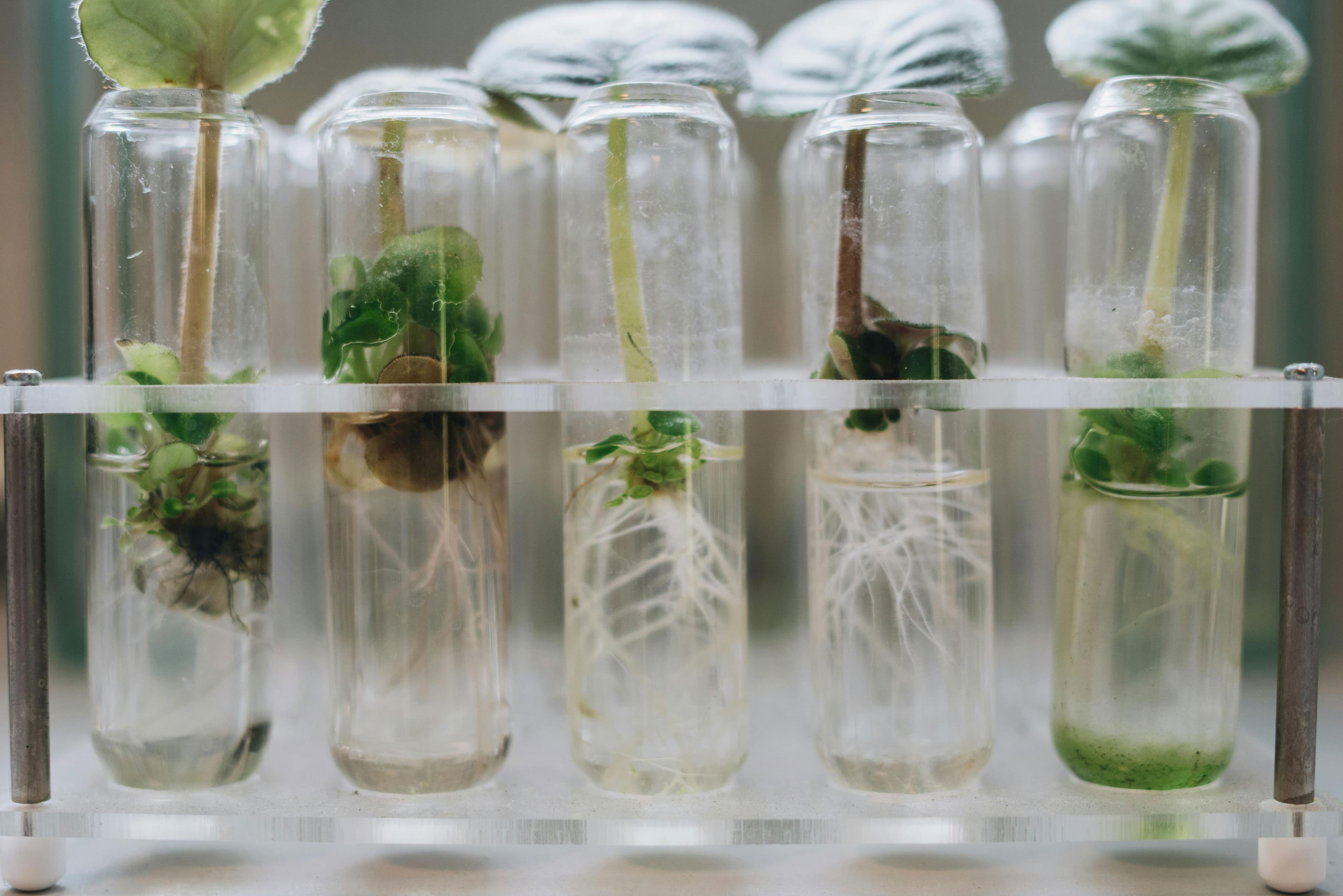
The Australian native foods industry sits at an intersection of conservation, culture, and commerce. As demand for bush foods grows—from restaurant menus to supermarket shelves—the industry faces the challenge of scaling production sustainably. Tissue culture offers solutions that address both conservation priorities and commercial needs.
The Conservation Imperative
Several commercially valuable native food species carry conservation concerns. Perhaps the most notable is Davidson's plum (Davidsonia spp.), prized for its intense burgundy fruit used in jams, sauces, and wines.
Davidsonia jerseyana, one of the three Davidson's plum species, is classified as endangered in its native habitat in the rainforests of northern New South Wales. Wild populations are limited and face ongoing pressures.
This creates a tension: market demand for Davidson's plum is growing, but increased wild harvest would further pressure already vulnerable populations. The solution lies in cultivation—but scaling cultivation requires reliable propagation methods.
Tissue culture provides a pathway that serves both conservation and commercial goals. Plants can be multiplied ex-situ (outside their natural habitat) without impacting wild populations. Indeed, cultivation may ultimately reduce harvest pressure on wild stocks by providing an alternative commercial supply.
The Myrtle Rust Threat
A more recent challenge affects multiple important bush food species: myrtle rust. Caused by the fungal pathogen Austropuccinia psidii, myrtle rust was first detected in Australia in 2010 and has since spread along the eastern seaboard.
The disease threatens members of the Myrtaceae family—which includes several commercially significant native food plants:
- Lemon myrtle (Backhousia citriodora): Valued for its exceptionally high citral content—higher than lemongrass—and used in teas, flavourings, and essential oils.
- Riberry (Syzygium luehmannii): Produces bright magenta fruit with clove-like flavour, increasingly popular in restaurants and food manufacturing.
- Other Syzygium species: Including lilly pilly and related bush food plants.
For growers and nurseries working with these species, disease-free starting material is increasingly critical. Tissue culture, performed under sterile laboratory conditions, produces pathogen-free plants that can form the foundation of clean production systems.
Why Disease-Free Stock Matters
- • Reduces disease establishment in new plantings
- • Enables production of certified clean stock for industry
- • Supports potential development of resistant selections
- • Reduces pathogen pressure across production landscapes
From Wild Harvest to Cultivation
The Australian native foods industry has historically relied heavily on wild harvest. Foragers collect products from naturally occurring populations, supplying restaurants and manufacturers seeking authentic bush food ingredients.
However, this model faces limitations. Wild harvest is inherently variable— weather, seasonal conditions, and population dynamics all affect availability. Quality can be inconsistent. And for some species, sustainable harvest levels may not meet growing market demand.
The transition to cultivation addresses these constraints, but requires substantial quantities of planting material. Many native food species present propagation challenges:
- Lemon myrtle is notoriously slow to strike from cuttings
- Quandong is hemi-parasitic, requiring host plants for establishment
- Native pepper is dioecious, requiring both male and female plants for fruit production
- Davidson's plum propagates poorly from conventional vegetative methods
Tissue culture overcomes many of these constraints, enabling production of commercial quantities from selected elite plants.

Preserving Genetic Quality
Beyond simply producing plants, tissue culture enables preservation and multiplication of specific genetic selections. When a grower or researcher identifies a plant with superior characteristics—higher oil content in lemon myrtle, larger fruit in riberry, particular flavour notes in native pepper— that selection can be multiplied exactly through tissue culture.
This genetic preservation matters for several reasons:
- Maintains consistency for commercial production
- Preserves elite selections for breeding programs
- Enables conservation of rare genetic variants
- Supports development of improved commercial varieties
Industry Outlook
The Australian native foods industry continues to grow, driven by consumer interest in unique local ingredients, restaurant demand for distinctive flavours, and export opportunities for authentic Australian products.
AgriFutures Australia recognises native foods as a key emerging industry, and research continues into improved production methods, variety development, and market expansion.
Tissue culture will play an important role in this growth—providing the propagation infrastructure needed to scale from wild harvest to sustainable cultivation, while supporting conservation of the species that make this uniquely Australian industry possible.
Learn More
For more on the native foods industry and the tissue culture work we're interested in:
Australian Native Foods Industry Page →Growing Bush Foods?
Native foods are one of the areas we're interested in. If you're working with bush food species, we'd be glad to start a conversation.