
Insights
Tissue Culture and Biosecurity in Australian Agriculture
January 2025 · 10 min read
Australia's geographic isolation has been its greatest biosecurity asset. Surrounded by ocean, the continent has avoided many of the plant diseases and pests that affect agriculture elsewhere. Maintaining this advantage requires rigorous systems for managing plant material entering and moving within the country. Tissue culture plays a quietly significant role in this framework— providing pathogen-free planting stock and enabling safer international plant trade.
Australia's Biosecurity Framework
Australia's plant biosecurity is governed by the Biosecurity Act 2015, administered by the Department of Agriculture, Fisheries and Forestry (DAFF). The Act establishes the legal framework for managing biosecurity risks associated with importing goods, including plant material, into Australia.
For plant imports, DAFF maintains a set of import conditions that specify the requirements for bringing plant material into the country. These conditions vary by species, country of origin, and the form of the plant material (seed, cutting, tissue culture, whole plant). Import permits are required for most plant material, and consignments must be accompanied by a phytosanitary certificate issued by the exporting country's national plant protection organisation.
At the state and territory level, additional regulations manage the movement of plant material within Australia. Each state has its own plant health legislation and, in some cases, restrictions on interstate movement of certain plant species to prevent spread of regionally contained pests or diseases.
Why Tissue Culture Matters for Biosecurity
Tissue culture material presents a lower biosecurity risk than most other forms of plant material for several fundamental reasons, which makes it a preferred pathway for international plant movement under Australian regulations.
Sterile Production Environment
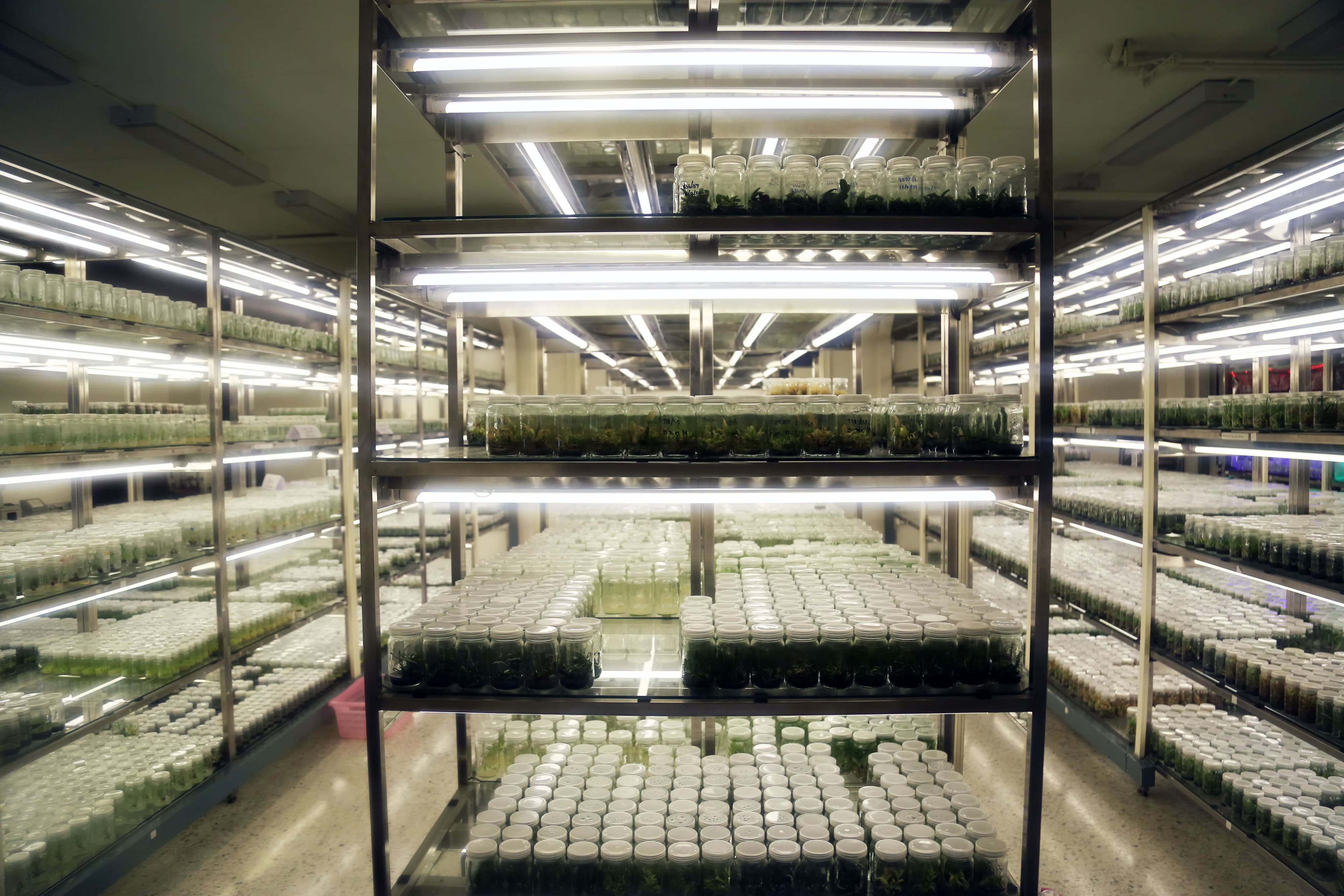
Tissue culture plants are produced in sterile laboratory conditions. The culture process itself involves surface sterilisation of plant material, transfer to sterile nutrient media, and growth in sealed vessels within a controlled environment. This process excludes soil-borne pathogens, insect pests, fungal spores, and many bacterial and viral contaminants that can be carried on conventionally propagated material.
Absence of Soil and Growing Media
Soil is one of the highest-risk pathways for pest and disease introduction. It can harbour plant pathogens (Phytophthora, Fusarium, nematodes), weed seeds, and invertebrate pests. Tissue culture plants are grown on artificial nutrient media (typically agar-based), completely eliminating the soil pathway. This is a key reason why DAFF import conditions often have less restrictive requirements for tissue culture material compared to plants grown in soil or potting media.
Pathogen Elimination Through Meristem Culture
Certain tissue culture techniques go beyond pathogen exclusion to achieve active pathogen elimination. Meristem culture—the excision and culture of the very tip of the shoot growing point (typically 0.2–0.5mm)— can produce virus-free plants from virus-infected mother plants. This is because many plant viruses are unable to invade the rapidly dividing cells at the meristem tip, a principle first demonstrated by Morel and Martin in the 1950s and now a standard technique in plant pathology.
When combined with heat therapy (thermotherapy)—exposing the plant to elevated temperatures that inhibit viral replication before meristem excision— elimination rates for many important plant viruses can exceed 90%. This technique is routinely used to produce certified virus-free foundation stock for crops including potatoes, strawberries, sweet potatoes, and grapevines in Australian clean stock programs.
How Tissue Culture Reduces Biosecurity Risk
- • Sterile production eliminates surface-borne pests and pathogens
- • No soil or growing media removes major contamination pathway
- • Meristem culture can eliminate systemic viruses
- • Sealed vessels prevent contamination during transport
- • Small size allows easier inspection and testing
- • Laboratory documentation provides traceability
Tissue Culture in Practice: Import and Export
For Australian growers and nurseries seeking to import new plant varieties, tissue culture is often the most practical pathway. DAFF's import conditions for tissue culture material typically involve fewer post-entry quarantine requirements than for other plant forms, reflecting the lower biosecurity risk profile.
The process generally involves:
- Import permit application through DAFF's BICON (Biosecurity Import Conditions) database, which specifies the conditions for each plant species and country of origin.
- Phytosanitary certification from the exporting country, confirming the material meets Australia's import conditions and is free from specified pests and diseases.
- Inspection on arrival by DAFF biosecurity officers at the port of entry, who verify documentation and may visually inspect or sample the material.
- Post-entry quarantine (where required), with tissue culture material held in approved quarantine facilities for monitoring and testing before release.
For exports, Australian tissue culture material is generally well-regarded internationally due to Australia's favourable pest and disease status. Phytosanitary certificates for export are issued by DAFF after inspection, confirming compliance with the importing country's requirements.

Case Study: Banana Industry Biosecurity
Australia's banana industry provides a compelling example of tissue culture's biosecurity role. The industry, primarily based in north Queensland and valued at over $600 million annually according to the Australian Banana Growers' Council, faces significant disease threats including Panama disease Tropical Race 4 (TR4), caused by Fusarium oxysporum f. sp. cubense.
TR4 was first detected in the Tully Valley in north Queensland in 2015. The disease is soil-borne, incurable, and can persist in soil for decades. Its management depends heavily on preventing spread—and clean planting material is fundamental to this strategy.
Tissue culture banana plants, produced under sterile conditions without contact with soil, provide the cleanest possible starting material for new plantings. The Biosecurity Queensland program and industry bodies strongly promote the use of tissue culture planting material as part of the on-farm biosecurity framework for managing TR4 risk.
This example illustrates a broader principle: as pest and disease pressures increase—whether from new incursions like TR4 or established threats like Phytophthora—the value of pathogen-free starting material grows correspondingly.
Supporting Domestic Biosecurity
Tissue culture's biosecurity benefits extend beyond international trade. Within Australia, tissue culture supports domestic plant health through several mechanisms:
- Clean stock schemes: Industry-managed programs for crops such as potatoes, strawberries, and grapevines use tissue culture to produce foundation material that is tested and certified free from specified viruses and other pathogens. These programs, typically coordinated through state departments of agriculture, provide the basis for the commercial nursery supply chain.
- Interstate plant movement: Tissue culture material may face fewer restrictions when moved between Australian states compared to soil-grown plants, as it eliminates the soil-borne pest pathway that drives many interstate quarantine requirements.
- Emergency response: When new pest or disease incursions are detected, the availability of pathogen-free tissue culture stock can support replanting programs in affected areas, helping industries recover more quickly from biosecurity events.
Looking Ahead
Australia's biosecurity environment is becoming more complex. Climate change is altering pest and disease distribution patterns, international trade volumes continue to increase, and new threats emerge regularly. The Inspector-General of Biosecurity has highlighted the growing pressure on Australia's biosecurity system in successive annual reports.
In this context, tissue culture's contribution to plant biosecurity— producing clean material, enabling safer trade, and supporting disease management programs—will likely become more valued, not less. For Australian agriculture, the investment in tissue culture capability is an investment in biosecurity resilience.
References and Further Reading
- • Australian Government Department of Agriculture, Fisheries and Forestry. Biosecurity Act 2015 and BICON import conditions database.
- • Morel, G. & Martin, C. (1952). "Guérison de dahlias atteints d'une maladie à virus." Comptes Rendus de l'Académie des Sciences, 235.
- • Australian Banana Growers' Council. Industry biosecurity and Panama TR4 management.
- • Inspector-General of Biosecurity. Annual reports on Australia's biosecurity system performance.
- • Plant Health Australia. Industry biosecurity plans and preparedness.
Learn More
For more on the import/export and plant health work we're interested in:
Need Biosecurity-Compliant Plant Material?
Biosecurity-compliant propagation and plant import/export are areas we're keen to explore. If this is part of your work, we'd be glad to start a conversation.